After weeks of chronic back pain, Kinetic Relief gave me real, lasting comfort.
Mark T.


My plantar fasciitis improved so much, I’m back to running without pain.
Lisa M.


★★★★★
★★★★★
Unlocking the Power of Class 4 Laser Therapy
In the evolving landscape of pain management, laser therapy emerges as a beacon of hope for those suffering from various debilitating conditions. This conservative treatment option is gaining recognition for its significant role in alleviating pain and promoting tissue healing without resorting to invasive procedures.
Class 4 laser therapy stands distinct from its lower-power counterparts. By utilizing a significantly higher power output, it penetrates deeper into affected tissues, offering a more robust and effective approach to pain management. This article provides an insight into the world of therapeutic lasers, shedding light on the mechanics and substantial benefits of Class 4 technology.
Understanding Class 4 Laser Therapy
Class 4 laser therapy represents a significant advancement in therapeutic technology. Its high-intensity laser beam is designed specifically to reach deeper into the body compared to lower-class lasers. This increased penetration depth allows for the effective treatment of a wide variety of underlying musculoskeletal conditions.
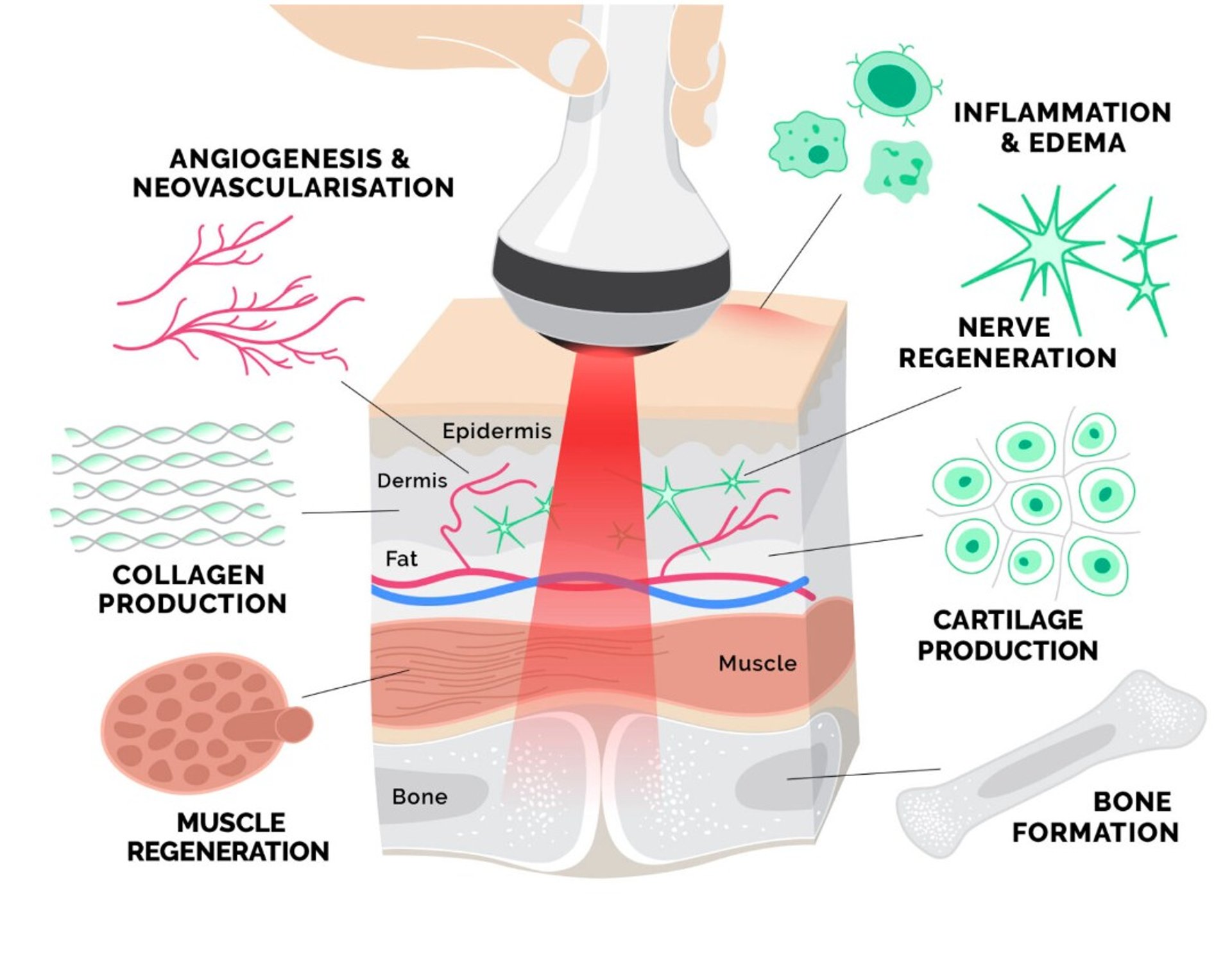
The core mechanism behind Class 4 laser therapy lies in photobiomodulation. This process uses light to stimulate cellular activity, thereby accelerating the body's natural healing processes and reducing recovery time.
The primary distinction between Class 4 and other forms of laser therapy (like Class 3 or "cold" lasers) revolves around power output and the resulting depth of tissue penetration. Lower-class lasers, while beneficial for superficial treatments, lack the intensity required to effectively reach deeper structures. Class 4 lasers are specifically designed to target deep-seated tissues, making them highly effective for treating complex, chronic, and acute conditions.
The Four Main Benefits of Laser Therapy
Substantial Pain Reduction:
One of the most immediate and significant benefits is substantial pain relief. The therapy works by reducing nerve sensitivity and triggering the release of endorphins—the body's natural painkillers. This dual action not only alleviates discomfort but also reduces a patient’s dependence on pharmaceutical pain medications.
Enhanced Tissue Healing:
Laser therapy excels at stimulating cellular regeneration and repair. Through photobiomodulation, the laser light encourages cell proliferation and rapid tissue repair, significantly accelerating the entire healing process.
Increased Circulation:
This therapy enhances blood flow to the treated area. Improved circulation is vital for removing inflammatory waste products and delivering the oxygen and nutrients essential for effective healing, faster recovery times, and reduced swelling.
Reduced Inflammation:
Inflammation is a common response to injury that can hinder recovery. Laser therapy effectively reduces inflammation at a cellular level, aiding in quicker rehabilitation and less discomfort throughout the healing process.


The importance of wavelengths
Effective laser therapy employs a combination of various wavelengths to achieve optimal results. Each wavelength has unique interactions with human tissue:
650 nm: Excellent for treating superficial tissues and skin conditions.
810 nm: Known to increase cellular energy production (ATP) and stimulate the immune system.
915 nm: Focuses on improving direct pain relief mechanisms.
980 nm: Targets circulation improvements and facilitates faster recovery.
Understanding and utilizing a laser system that offers these precise wavelengths allows for targeted, specific therapy. Working with a provider trained extensively in laser therapy maximizes the therapeutic benefits for your unique condition.
Beyond the Surface: Why Class 4 Lasers Are Different
It’s important to understand how Class 4 lasers differ from traditional low-level laser therapy (LLLT).
Traditional Low-Level Laser Therapy (LLLT or "Cold Laser"):
Often referred to as cold laser therapy, LLLT operates at lower power levels (typically under 500 milliwatts). While it also utilizes specific light wavelengths to stimulate healing, its penetration depth is very limited. This makes LLLT generally more suitable for surface-level conditions, minor injuries, and very superficial inflammation.
The Class 4 Distinction:
Class 4 lasers represent a more advanced and potent form of treatment, operating at a much higher power output (well above 500 milliwatts). This intensity allows for significantly deeper tissue penetration and a broader range of therapeutic applications. The higher energy delivery makes it particularly effective for treating deep musculoskeletal injuries and chronic conditions.
Due to this higher power, Class 4 laser therapy can often provide shorter treatment times and potentially quicker clinical results. However, this power also requires precise control and proper training to manage potential heat generation in the tissues safely. In summary, while both LLLT and Class 4 utilize light to promote healing, they are unique tools distinguished by their power output, depth of penetration, and clinical efficacy.
Versatile applications for pain management
Laser therapy is remarkably versatile, addressing a wide range of acute and chronic pain conditions. It can effectively treat:
Muscular strains and overuse syndromes
Degenerative arthritis
Rheumatoid arthritis
Neuropathic pain and neuropathy
Sports injuries
Its non-invasive nature and high effectiveness make it a preferred option for patients seeking a drug-free, non-surgical alternative to traditional pain management methods.
Laser Therapy in Neuropathy Management
In the management of neuropathy, Class 4 laser therapy plays a crucial role. It alleviates debilitating symptoms by improving overall nerve function and reducing the pain, numbness, burning, and tingling associated with the condition.
While laser therapy is not a definitive cure for neuropathy, this targeted approach has shown promising results in significantly improving the quality of life for neuropathy patients who battle chronic discomfort on a daily basis.
Scientific Research and Evidence
The efficacy of laser therapy is supported by robust scientific research. Numerous clinical studies have underscored its success:
Research has demonstrated significant reductions in knee pain among patients undergoing laser therapy treatment.
Other studies highlight its effectiveness in treating chronic neck pain, showing marked improvements in pain levels and functional ability.
Conclusion
Laser therapy for pain stands as a groundbreaking, evidence-based tool in the realm of pain management and tissue regeneration. Its ability to offer deep tissue treatment, coupled with the profound benefits of pain relief, enhanced healing, improved circulation, and reduced inflammation, positions it as a vital component in modern therapeutic practice.
As research continues to evolve, the clinical scope and potential of Class 4 laser therapy will only expand, offering new avenues for effective pain management and complete recovery. If you have questions about whether laser therapy is right for your condition, please feel free to reach out to our office to discuss a personalized treatment plan.